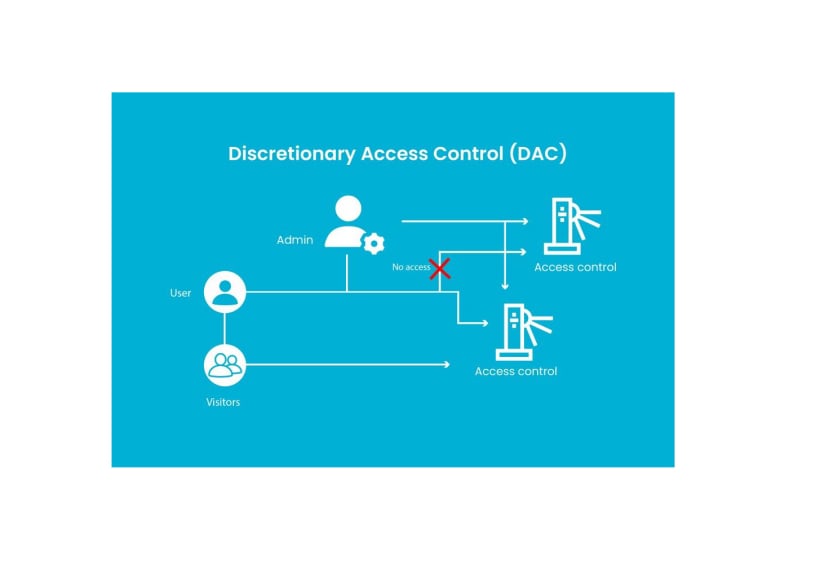
֍ Discretionary Access Control (DAC) -
The owner of the resource dictates who is allowed access and what permissions they hold. It is highly flexible but provides lower security, commonly used in standard personal computers.
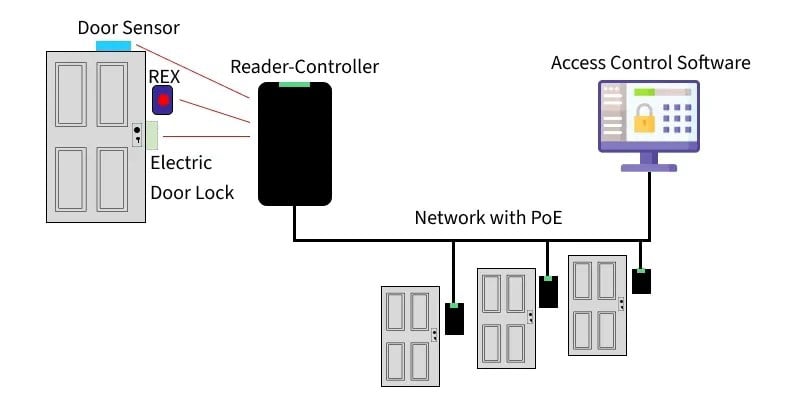
Access control limits who can use resources, protecting physical facilities. The five primary models are Discretionary Access Control (DAC), Mandatory Access Control (MAC), Role-Based Access Control (RBAC), Attribute-Based Access Control (ABAC), and Rule-Based Access Control.
The owner of the resource dictates who is allowed access and what permissions they hold. It is highly flexible but provides lower security, commonly used in standard personal computers.
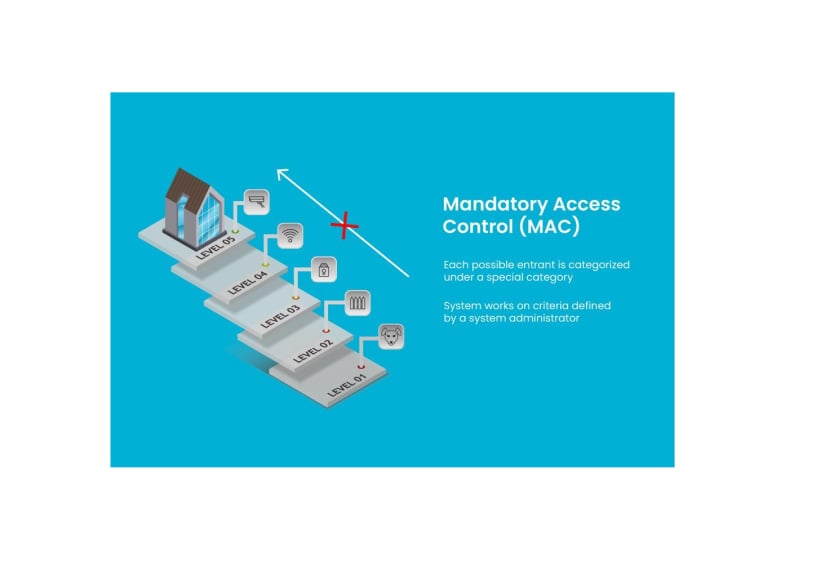
A strict, centrally enforced system where users cannot change permissions. Access is decided by a security label or clearance level. It is primarily used in high-security government and military environments.
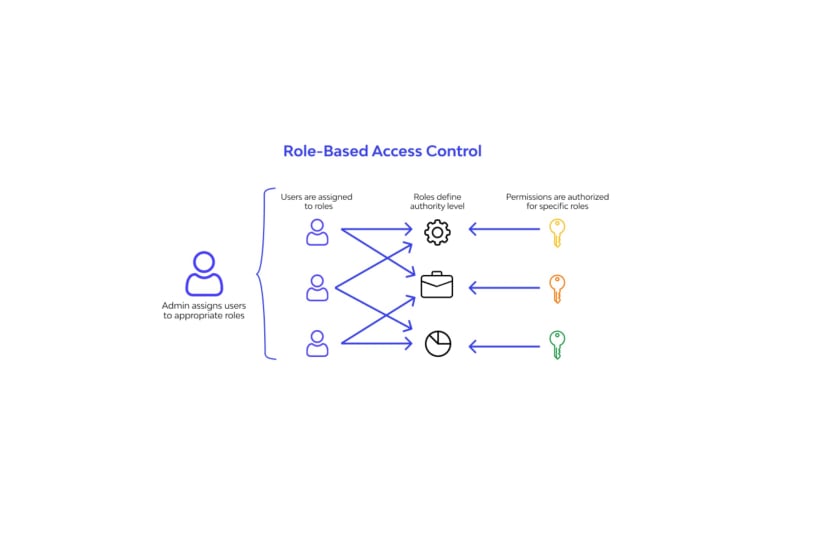
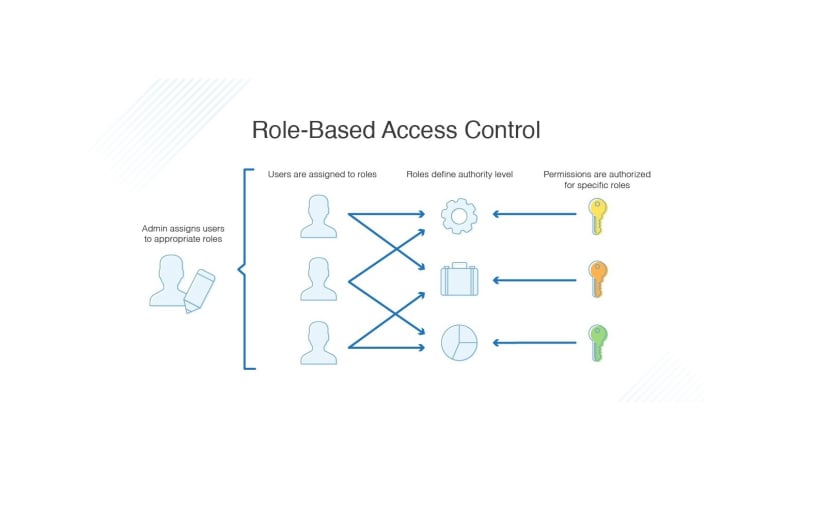
Permissions are assigned based on a user's specific job title or role within the organization. This is the most common model for businesses because it makes managing large-scale staff permissions much easier.
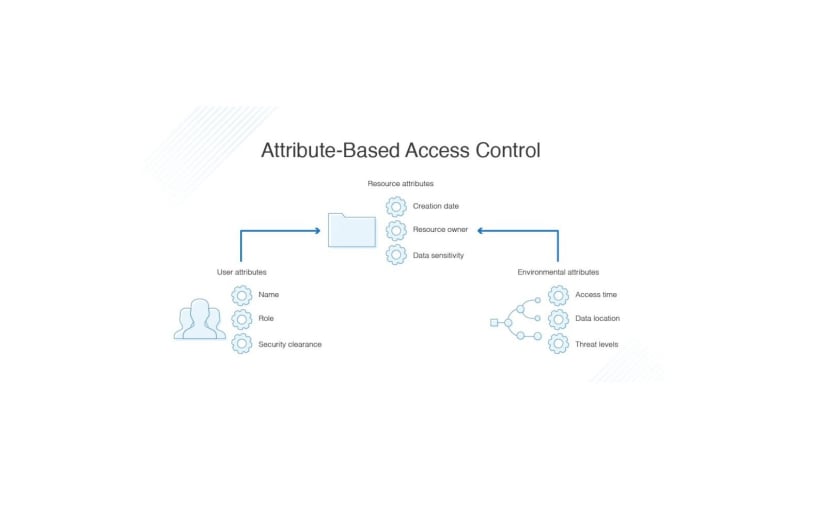
A dynamic, highly flexible strategy that evaluates multiple conditions to make access decisions, including user attributes (e.g., job title, security clearance), resource properties (e.g., file type, creation date), and environmental context (e.g., access location or time).
Access is granted based on predefined, system-wide rules or conditions, such as time-of-day restrictions (e.g., allowing lab access only between 9 AM and 5 PM).
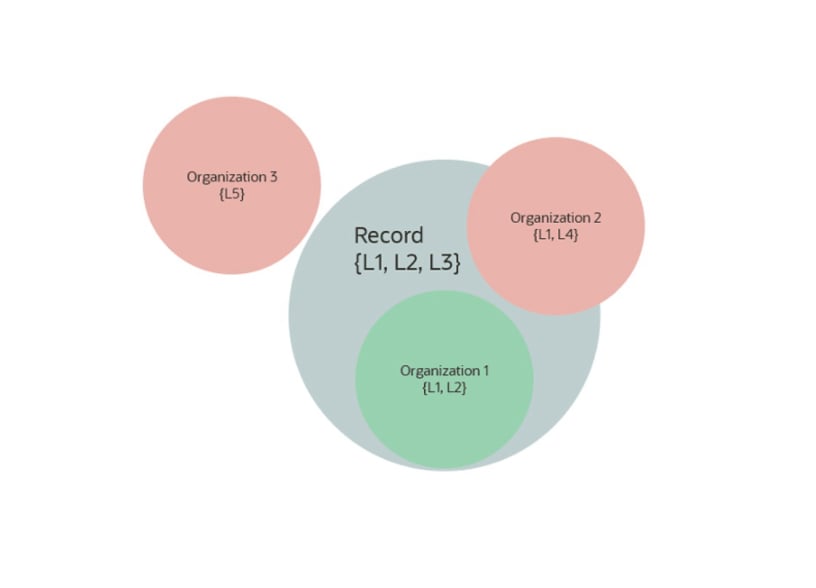
A security framework that grants permissions based on an individual's position or structure within an enterprise (e.g., departments, teams) rather than solely on user attributes or static roles. It allows for contextual rules encompassing permissions, prohibitions, and obligations tailored to specific organizational environments.